

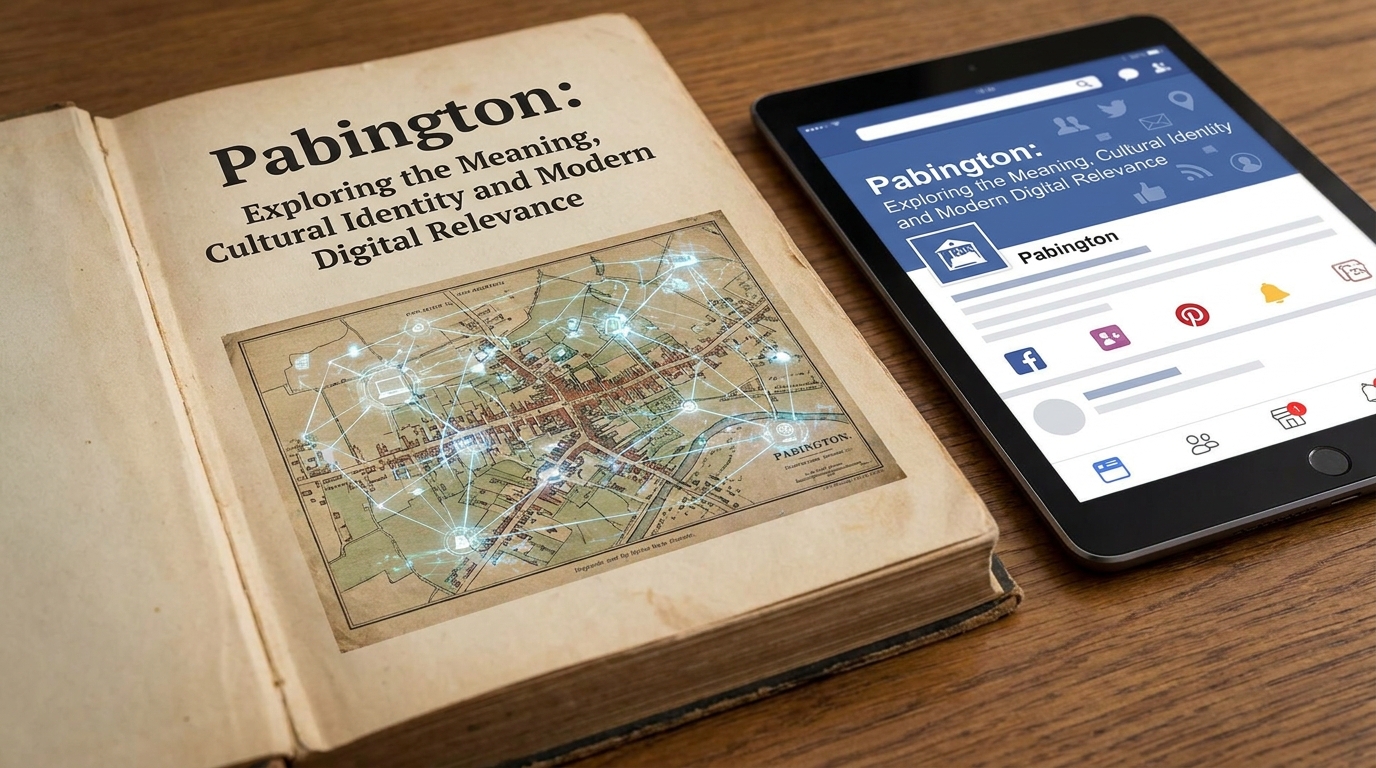
Pabington is a distinctive and uncommon term that carries the potential to represent place identity cultural heritage or modern conceptual branding depending on context. In today’s interconnected world, unique names like Pabington often gain attention not only for their linguistic structure but also for their adaptability across digital culture, storytelling, and brand development.
Modern communication is heavily influenced by identity creation. Whether for locations, fictional settings, digital platforms, or emerging brands, names play a crucial role in shaping perception and recognition. Pabington fits naturally into this landscape because it carries a traditional yet flexible structure that can be adapted across multiple interpretations.
In this article, Pabington is explored as a conceptual identity through historical imagination cultural framing digital transformation and modern branding relevance. This approach helps highlight how names evolve beyond simple labels into meaningful symbols within global culture.
The Conceptual Identity of Pabington
Pabington has a structure that feels familiar yet distinctive, resembling traditional English place names that often end with suffixes like “-ton,” historically meaning settlement or town. This linguistic pattern gives Pabington a sense of heritage and grounded identity even if it is used in a modern or fictional context.
Names with such structures are often associated with stability, community, and historical depth. Because of this, Pabington can easily be imagined as a village, town, estate, or regional district with its own cultural story.
In modern usage, however, names are no longer limited to geography. They are widely used in branding, entertainment, gaming environments, and digital ecosystems. Pabington therefore exists as a flexible identity that can represent both tradition and innovation depending on application.
This dual nature makes it valuable as a conceptual term in creative writing, world-building, or brand identity development.
Imagining the Historical Roots of Pabington
If Pabington were considered as a historical settlement, its origins could be traced to early agricultural communities that developed around fertile land and trade routes. Many traditional towns in Europe evolved in similar ways, starting as small farming villages before expanding into structured communities.
Over time, such settlements often developed local governance systems, marketplaces, and cultural traditions. Pabington could be imagined as a place where craftsmanship, agriculture, and community life formed the foundation of its identity.
Historical architecture in such a setting might include stone cottages, a central marketplace, a parish church, and manor estates belonging to influential families. These elements would reflect the typical evolution of rural settlements into structured towns.
While Pabington may not be tied to documented history, imagining its development helps illustrate how place names carry cultural storytelling power.
Pabington in Cultural and Social Interpretation
Cultural identity plays a significant role in how names are perceived. A name like Pabington suggests familiarity and heritage, making it suitable for narratives that emphasize tradition, community values, and long-standing social structures.
In literature or storytelling, Pabington could represent a close-knit society where relationships, customs, and shared history shape everyday life. Such settings are often used to explore themes of belonging, change, and generational continuity.
Social interpretation of place-like names also influences emotional perception. Names that sound established or traditional tend to evoke feelings of stability and nostalgia.
Pabington therefore carries a cultural tone that can be adapted for storytelling, creative media, or symbolic representation of community life.
Digital Transformation and the Evolution of Place Names
In the digital era, names are no longer confined to physical geography. They are used extensively in online platforms, virtual environments, and digital branding systems.
Pabington could easily function as a digital identity such as a virtual world, online platform, simulation environment, or even a gaming location. The flexibility of the name makes it suitable for immersive digital experiences where world-building is essential.
As technology advances, especially in areas like virtual reality and metaverse development, the demand for unique and memorable place names continues to grow. Names like Pabington help create immersive environments that feel believable and engaging.
Digital transformation has expanded the meaning of identity itself. A name can now represent not only a place but also a platform, experience, or community within digital ecosystems.
Pabington as a Modern Branding Identity
Branding today depends heavily on uniqueness, memorability, and emotional connection. Pabington has qualities that make it suitable for use as a brand name across various industries including technology, lifestyle products, hospitality, or creative services.
Its structure is easy to pronounce, visually balanced, and internationally adaptable. These qualities are essential in modern branding where global reach is a priority.
A brand named Pabington could evoke values such as reliability, tradition, craftsmanship, or innovation depending on its positioning. For example it could represent a luxury product line, a hospitality brand, or a digital service platform.
Modern branding also relies on storytelling. A name like Pabington allows marketers to build narratives around heritage, authenticity, and evolution, which are powerful emotional drivers for consumers.
Creative Applications of Pabington
Creative industries often rely on unique names for storytelling, world-building, and conceptual design. Pabington could serve as the foundation for novels, films, games, or fictional universes.
In a fictional setting, Pabington might be portrayed as a historic town with hidden secrets, evolving industries, or a rich cultural past. It could also function as a futuristic reinterpretation of a traditional settlement adapting to technological change.
Game developers often create immersive worlds using names that feel authentic yet imaginative. Pabington fits this requirement because it feels grounded while still open to interpretation.
Writers and creators value such flexibility because it allows them to shape meaning without being constrained by real-world definitions.
Psychological Impact of Structured Names
Names like Pabington often have a subconscious psychological effect on audiences. The presence of familiar linguistic patterns creates a sense of trust and recognition.
The suffix “-ton” is commonly associated with towns and settlements, which can evoke feelings of stability and community. This makes Pabington feel grounded even without specific context.
Psychologically, humans tend to respond positively to names that resemble known structures. This helps explain why such names are widely used in branding and storytelling.
The balance between familiarity and uniqueness makes Pabington memorable and adaptable across different uses.
Globalization and Name Adaptability
Global communication has increased the importance of names that work across cultures and languages. Pabington has a neutral and adaptable structure that allows it to be recognized internationally without significant pronunciation barriers.
In global markets, names must avoid cultural limitations while maintaining distinct identity. Pabington achieves this balance by being simple, structured, and culturally neutral.
This adaptability is especially important in digital platforms, where audiences come from diverse linguistic backgrounds. A globally usable name increases accessibility and brand reach.
Future Potential of Pabington
The future of names like Pabington lies in their adaptability across emerging technologies and creative industries. As digital ecosystems expand, the need for flexible identities will continue to grow.
Pabington could potentially represent a virtual city, a digital platform, a creative studio, or even a narrative universe in future media.
Artificial intelligence, virtual reality, and immersive storytelling technologies will further expand how names are used and experienced. In such environments, Pabington could become part of interactive worlds or AI-generated environments.
The evolution of digital identity ensures that names are no longer static labels but dynamic elements of experience design.
Conclusion
Pabington is a versatile and conceptually rich name that reflects the evolving nature of identity in both cultural and digital contexts. Whether imagined as a historical settlement, fictional world, modern brand, or digital ecosystem, it carries a sense of structure, familiarity, and adaptability.
In a world where names shape perception and meaning across industries and technologies, Pabington demonstrates how language can evolve into creative and functional identity. Its potential lies in its flexibility, allowing it to exist in storytelling, branding, digital innovation, and cultural imagination.
Ultimately, Pabington represents more than just a word. It symbolizes how modern identity is created, interpreted, and transformed in an interconnected global environment.